
Catch risky content before it goes live.
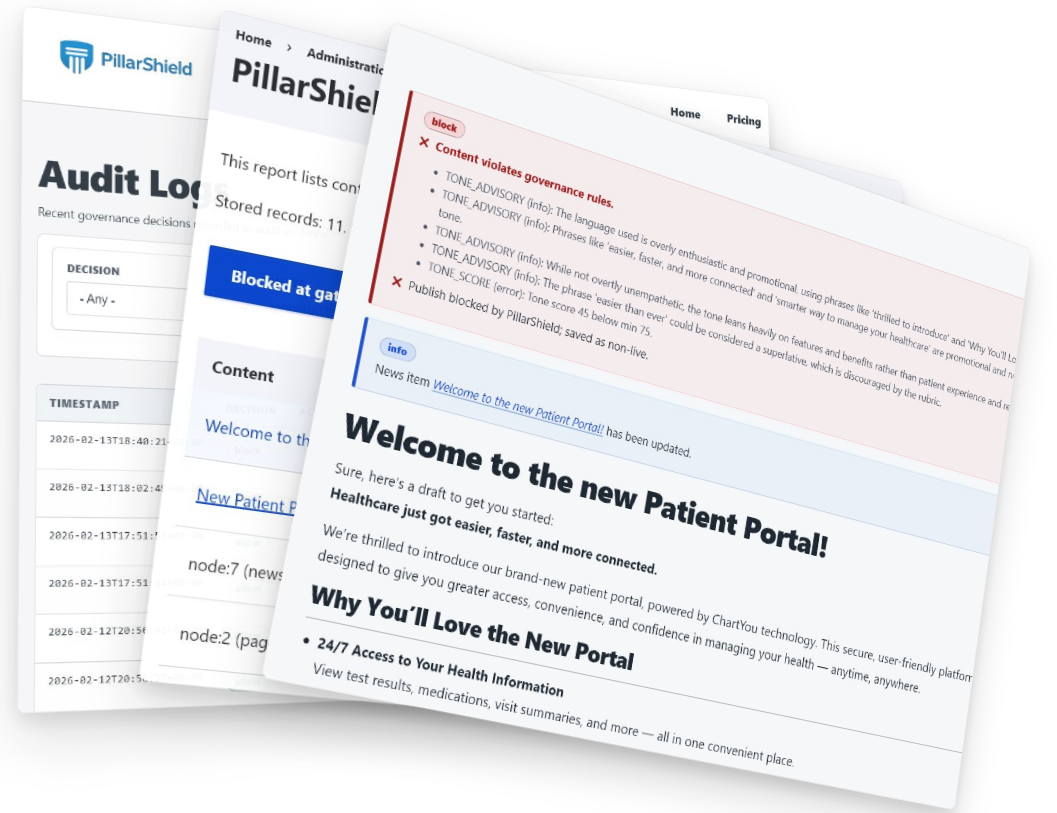
Teams are publishing more, faster, and often with AI and fewer reviewers. PillarShield runs checks at the publish gate and blocks violations in about 1 second, with audit evidence for every decision.
- Blocks PII + policy violations
- SaaS-side audit trail
- On Most CMS
Prevent the Expensive Mistake
Your content team is smaller than it was last year, but the publishing calendar didn't shrink. Someone is tired, behind on deadlines, and copying a page from a shared doc into the CMS. They hit publish. A normal, everyday thing.
But the doc had something it shouldn't: a phone number, an internal-only note, a credential, a customer name tied to a private deal, or a line that changes the legal meaning of the page. Normally this would have been caught, but resources are more scarce and it’s hard to catch everything with an increased workload.
The mistake isn't that people are careless — it's that they're exhausted and there's no safety net. PillarShield is that safety net.
What PillarShield does
PillarShield checks content at the moment you hit save or publish. If it violates policy, it blocks the action and explains what triggered the decision in about a second. Every allow/block outcome is recorded server-side as audit evidence.
PII + credential detection
Phone numbers, emails, SSNs, access keys, internal-only markers, and common sensitive patterns. Deterministic rules catch the obvious; AI helps with ambiguous cases.
Prohibited terms + policy rules
Legal restrictions, brand terms, competitor mentions, regulated language, or anything your org needs to prevent. You define the rules; PillarShield enforces them consistently.
Tone + safety checks
Catch off-brand tone, harassment/hate, risky claims, and content that shouldn’t be public. Deterministic rules always block; AI can warn or block based on your thresholds.
Audit trail you can hand to anyone
A durable record of what was checked, when, and what happened. When security, compliance, or legal asks “how do you govern publishing?”, you can show it.
Why now
AI increased content volume. Headcount didn’t. The “review gap” is now a governance problem. The best time to catch risk is before it goes live.
Prevention beats cleanup
Publishing mistakes are expensive: takedowns, retractions, legal review, breach notifications, and lost trust. Blocking at the boundary prevents incidents instead of managing fallout.
Accountability without drama
When you are audited, you can show what was allowed or blocked, when and why it happened without guesswork.
Predictable behavior by default
Deterministic rules are boring (in the best way). AI adds judgment where needed, but you control warn vs block thresholds.
Works with your CMS
Drupal
Available on Drupal.org.
WordPress
Built and in review.
Everything else
REST API. If your system can make an HTTP request before publishing, PillarShield can govern it: Adobe AEM, Sitecore, Contentful, headless setups, CI/CD pipelines.
Put governance at the publish button.
If your team is publishing faster than it can review, add a guardrail at the gate, not an expensive cleanup after the fact.